
Real Artificial Intelligence In Our Time
AI is building our future. We are building the future of AI.
Building the future of AI
Artificial Intelligence like no other
Established approaches to AI, such as neural networks and large language models, lack key components to true artificial intelligence; a declarative model of the system’s learned information.
Our Artificial General Intelligence Learning Engine, or A.G.I.L.E, is based on symbolic reasoning, probability analysis, and decision theory which enables it to be creative, introspective, and perpetually self-improving.
A.G.I.L.E utilizes recursive self-improvement to not only respond to prompts, but to think critically about itself by itself.
“Let an ultraintelligent machine be defined as a machine that can far surpass all the intellectual activities of any man however clever. Since the design of machines is one of these intellectual activities, an ultraintelligent machine could design even better machines[…].”
Irving John Good (1965)
About
What we’re doing
Creating and deploying “real” intelligence
The idea of an artificial general intelligence (AGI) has been around since the dawn of AI research. The promise of an AGI is that it can do any task a human could do, but much more efficiently.
We aim to build an AGI that complements human achievements, not replaces them.
Why it’s different
AGI is different from AI
Humanity faces many challenges on a scale never before seen in our history. We believe that these challenges can only be overcome with the assistance of AI that is far beyond what we can access today.
Automating the scientific method will bring about a new generation of breakthroughs, improving the standard of living for all.
How we are building it
Our approach to AGI
True AGI faces 2 major dangers. The abuse of its capabilities by bad actors and potentially harmful unforeseen consequences of misstated AI directives, which must be mitigated.
Through centralized control of the AGILE system, human review, and establishment of a prime directive, ethical deployment can succeed.
Our Team
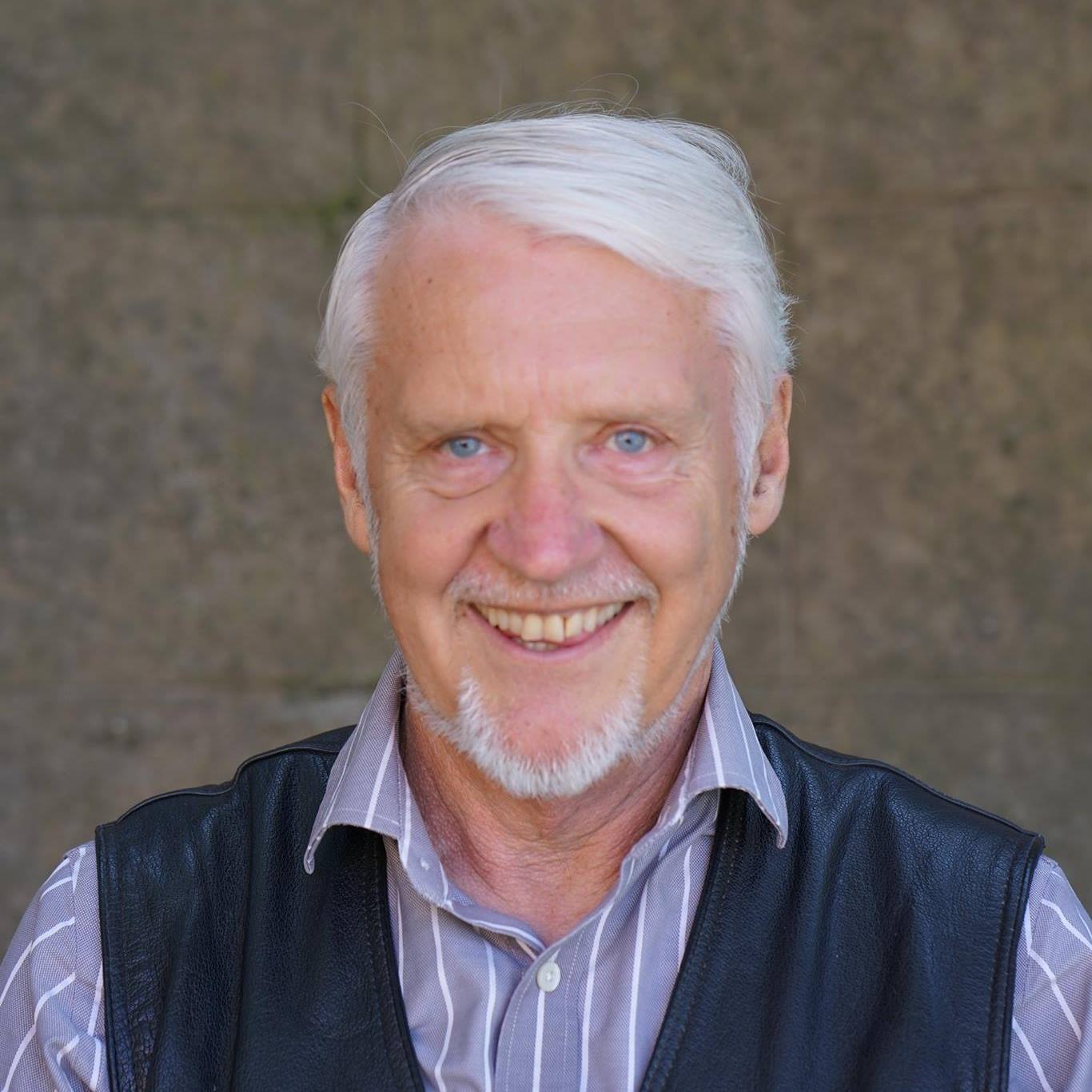
Peter Cheeseman, M. Phil, Ph.D.
Founder & CEO
Peter is a pioneer in AI research, having been actively involved in fundamental AI research for over 50 years. He received his Ph.D. in 1978 from Monash University, Australia, in artificial intelligence, and moved to SRI International, California, where he continued his AI research in planning, search, and reasoning under uncertainty. At SRI, he developed new algorithms for efficient Maximum Entropy inference that foreshadowed later Bayes Net algorithms, that are now standard in AI.
He developed a new approach to reasoning with spatial uncertainty called Simultaneous Localization And Mapping (SLAM), which is now the gold standard for robot navigation and tolerance stacking. In 1985, he became NASA’s first AI researcher, where he extended his research on reasoning under uncertainty to automatic discovery of structure in data, and unsupervised learning.
In 2020, Peter founded TuringEval to continue building the future of AI by developing an artificial general intelligence (AGI).

Nick Candau
COO, Senior Knowledge Engineer
In addition to handling the day-to-day operations, Nick specializes in logic, knowledge engineering, and business development strategy and has worked with the team to further those areas.
Nick Candau has been with TuringEval since 2020. Hailing from San Francisco, he studied Molecular and Cell Biology at San Francisco State University, Intelligence Management at Henley-Putnam, and Political Science at the University of California, Berkeley. In 2016, he was invited to participate in IARPA’s Hybrid Forecast Challenge. His interests include artificial intelligence, geopolitics, and probability theory.

Doug Cutrell
Senior Software Engineer
With deep roots in machine learning engineering and research, and the philosophy of artificial intelligence, Doug implements all components of A.G.I.L.E.
Graduating with honors from the California Institute of Technology, double majoring in biology and mathematics, he advanced his studies in molecular biology at MIT, and later cognitive science and mathematics at UCSD, at the graduate level.
With a long-seated interest in neural networks dating back to the late 80s, he has worked at Interval Research Corporation and Nortel Network Labs, as well as a number of startups in computational linguistics and biotech software.
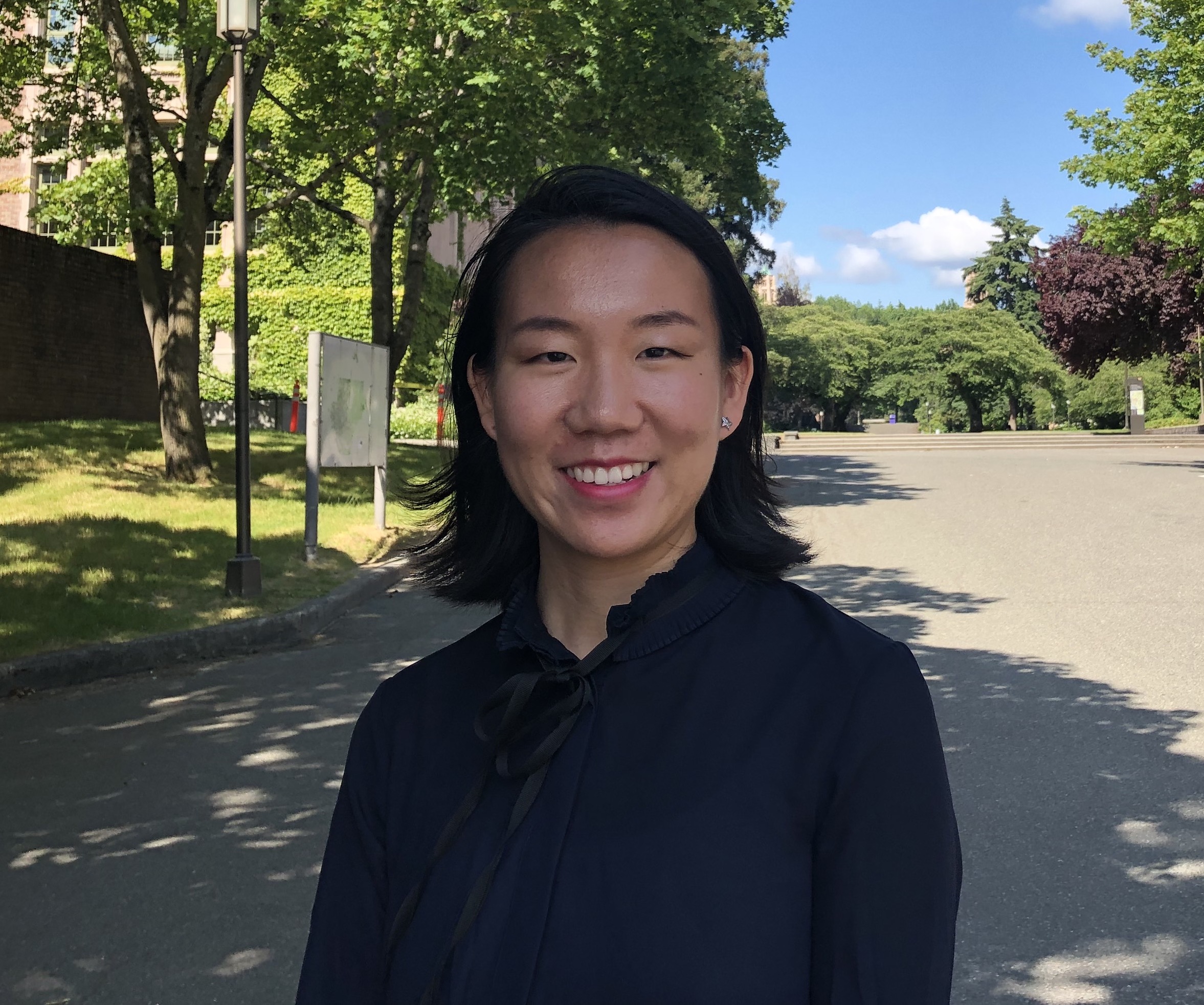
Rong Fan, Ph.D.
Software Engineer
Rong received her Ph.D. from the University of Washington. Her research topics include Operations Research and applied Machine Learning. During her time at TuringEval, she worked with the team to create a prototype for a de novo python interpreter for AGILE.

Jakob Shimer
Machine Learning Specialist
Jakob received his BA from Reed College in Mathematics and Computer Science. His interests include Artificial Intelligence and Machine Learning. Jakob specializes in the development and implementation of machine learning methods for learning and predicting probability distributions.

Felix Kaiser
Interaction Design & Linguistics Consultant
With a keen understanding of human-computer-interaction and linguistics, Felix consults on matters of user experience design, visual design, and linguistics.
Graduating with a BA in media studies and computer science from the University of Bayreuth, Germany, he understands the interplay of digital media and the human reception thereof, as well as the challenges of localization.
Become an Investor or Partner
Join us in our mission to build the future of AI technology!

